
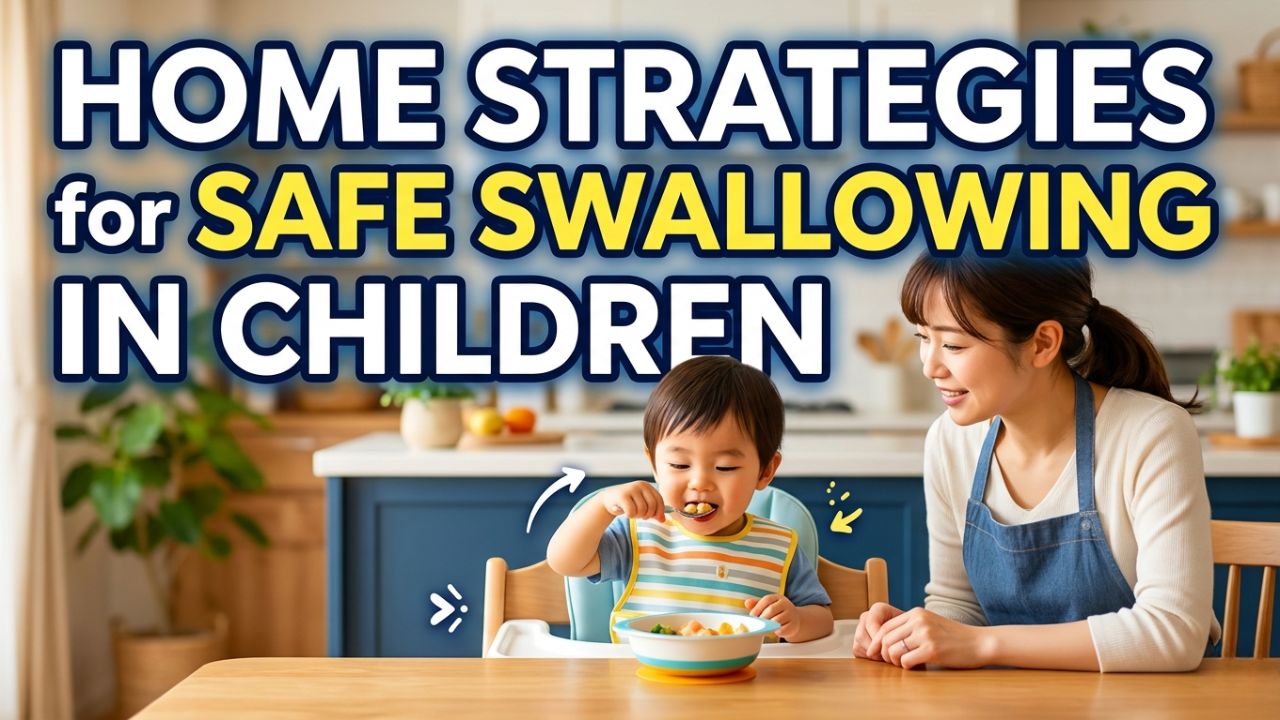
If your child has been diagnosed with dysphagia (difficulty swallowing), mealtimes can feel stressful and even scary. The good news is that many safe swallowing strategies can be practiced effectively at home under the guidance of a qualified Speech-Language Pathologist.
This article shares practical, evidence-based home strategies for children with swallowing difficulties. These tips are meant to support — not replace — professional therapy.
What Is Pediatric Dysphagia?
Dysphagia in children means the muscles and coordination needed for safe swallowing are not working as they should. It can happen at any stage: oral (mouth), pharyngeal (throat), or esophageal.
Common signs include:
- Coughing or choking during or after meals
- Wet or gurgly voice after eating/drinking
- Frequent throat clearing
- Food or liquid coming out of the nose
- Long mealtimes or refusal to eat
- Recurrent chest infections or pneumonia
If your child shows any of these signs, a formal swallowing evaluation by an SLP is essential.
Important Safety Note
The strategies below are general recommendations. Always follow the specific recommendations from your child’s Speech-Language Pathologist and medical team. Never change textures or feeding methods without professional guidance, as this could increase the risk of aspiration (food/liquid entering the lungs).
Proven Home Strategies for Safe Swallowing
1. Optimal Positioning
Positioning is one of the most powerful tools for safer swallowing.
- Seat your child upright at a 90-degree angle with good head and trunk support.
- Avoid feeding while reclined, lying down, or in car seats.
- Use supportive seating (high chair, adaptive chair, or therapist-recommended positioning equipment).
2. Slow and Controlled Pacing
Rushing increases the risk of aspiration.
- Offer small bites or sips and wait for a complete swallow before offering the next one.
- Use verbal cues such as “swallow” or “one more time.”
- For younger children, use a slow-feed teaspoon or controlled-flow cup.
3. Appropriate Food and Liquid Textures
Follow the International Dysphagia Diet Standardisation Initiative (IDDSI) levels exactly as recommended by your SLP. Common modifications include:
- Soft and moist foods (Level 6–7)
- Pureed foods (Level 4)
- Thickened liquids (mildly, moderately, or extremely thick) Never guess textures — get clear guidance from your therapist.
4. Chin Tuck or Head Turn Techniques
Your SLP may recommend specific postures such as:
- Chin tuck (tucking the chin slightly toward the chest)
- Head turn toward the weaker side These postures can help protect the airway during swallowing. Practice only as instructed.
5. Multiple Swallows and Throat Clearing
Teach your child (when developmentally appropriate) to take a second swallow after each bite or sip. Gentle throat clearing or coughing (if safe) can help clear residue.
6. Environmental Modifications
- Minimize distractions during meals (turn off TV, limit toys).
- Keep mealtimes calm and positive.
- Use consistent routines so your child knows what to expect.
7. Oral Motor Warm-Ups
Simple oral motor exercises (as recommended by your SLP) can improve strength and coordination before meals. These may include tongue movements, lip closure, and cheek strengthening.
Red Flags – When to Seek Immediate Help
Contact your doctor or go to the ER if your child shows:
- Frequent choking episodes
- Difficulty breathing after meals
- Recurrent fevers or chest infections
- Significant weight loss or dehydration
- Refusal to eat or drink for extended periods
Why Professional Support Matters
Home strategies work best when they are part of a personalized plan developed after a thorough evaluation (often including a Modified Barium Swallow Study or FEES). Virtual feeding therapy allows us to observe your child in their natural environment and coach you in real time.
At Eat Grow Thrive, we specialize in pediatric dysphagia and provide ongoing support so families feel confident and empowered at every meal.