
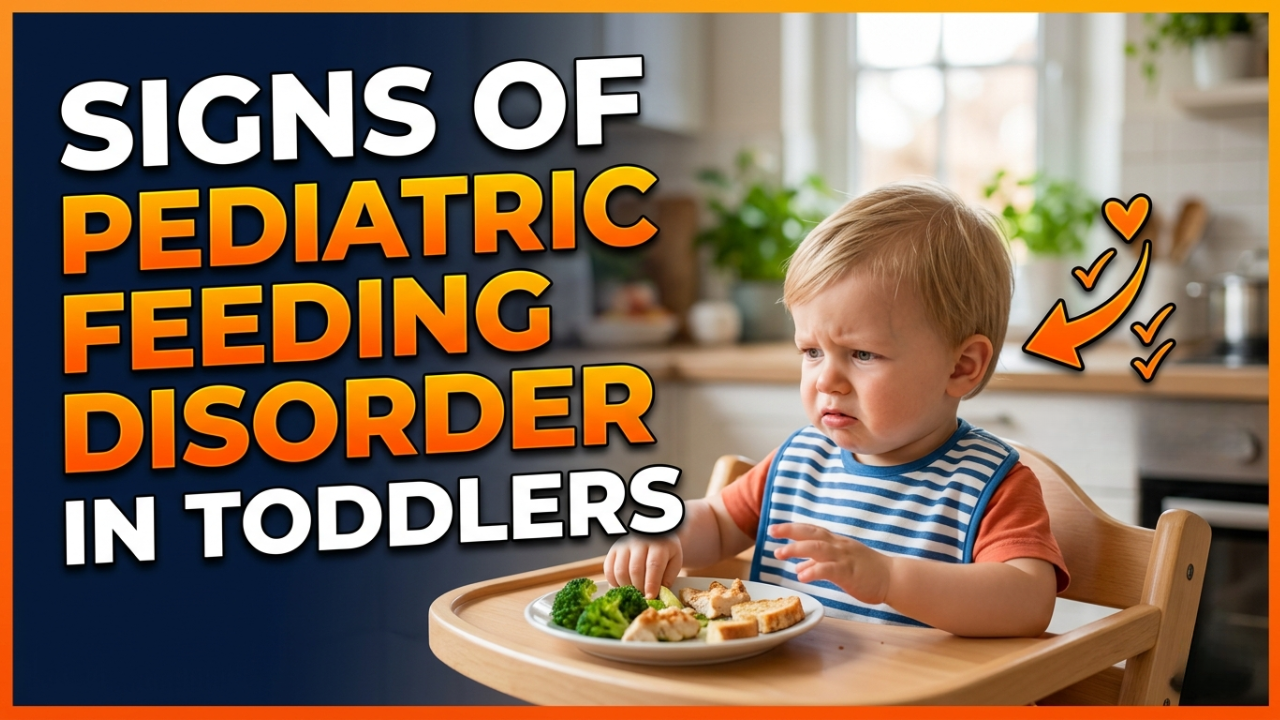
If mealtimes in your home feel like a daily battle, you are not alone. Many parents notice their toddler refusing foods, gagging at new textures, or eating only a handful of “safe” items. While picky eating is common in toddlers, there is a point where it crosses into something more serious: Pediatric Feeding Disorder (PFD).
Knowing the signs early can make a big difference. Here are the most important red flags parents should watch for in toddlers.
What Is Pediatric Feeding Disorder?
Pediatric Feeding Disorder is a medical condition where a child has ongoing difficulty eating or drinking that affects their nutrition, growth, development, or family life. It is not the same as typical picky eating that most children outgrow. PFD often requires professional support from a feeding specialist, such as a Speech-Language Pathologist.
10 Common Signs of Pediatric Feeding Disorder in Toddlers
- Eats Fewer Than 20 Foods Most toddlers go through phases of food refusal. However, if your child consistently eats fewer than 20 different foods and the list keeps shrinking, this is a strong sign of PFD.
- Gagging, Choking, or Vomiting at Meals Frequent gagging, retching, or vomiting when seeing, smelling, or tasting certain foods often points to sensory or swallowing difficulties.
- Refuses Entire Food Groups or Textures Complete refusal of all crunchy foods, mixed textures, vegetables, or meats is common in PFD and usually goes beyond normal picky behavior.
- Mealtimes Cause High Stress for the Whole Family If every meal turns into tears, fighting, or anxiety for parents and child, the feeding challenge is impacting quality of life.
- Significant Weight or Growth Concerns Dropping percentiles on the growth chart, needing supplements, or slow weight gain can be linked to Pediatric Feeding Disorder.
- Avoids Touching or Playing with Food Many toddlers explore food with their hands. Children with PFD often show strong aversion even to touching new foods.
- Coughing or Wet Voice After Eating Frequent coughing, throat clearing, or a wet-sounding voice during or after meals may indicate swallowing difficulties (dysphagia).
- Extreme Distress in Social Eating Situations Meltdowns at restaurants, birthday parties, or when the “safe” food is not available often signals deeper feeding issues.
- History of Early Feeding Problems Many children with PFD had difficulties as infants, such as poor latch, slow bottle feeding, reflux, or NICU stays.
- Prolonged Dependence on Bottles or Purees Continuing to rely heavily on liquids or smooth purees well past 18–24 months can indicate oral motor or sensory challenges.
When Should You Seek Professional Help?
If several of these signs sound familiar, consider scheduling an evaluation with a feeding-specialized Speech-Language Pathologist. Early intervention leads to much better outcomes.
At Eat Grow Thrive, we offer virtual feeding evaluations designed to understand your child’s unique needs and create a gentle, effective plan.
Next Steps for Parents
- Track what your child eats for one week (types of food, textures, and behaviors)
- Note any gagging, coughing, or distress during meals
- Talk to your pediatrician about a referral for feeding therapy
- Reach out for a virtual consultation with a specialist
You do not have to figure this out alone. Many families feel relief once they finally get the right support.
Ready to take the next step?
Book a virtual feeding evaluation with Elizabeth Cazier, M.S. CCC-SLP, CLC. We serve families nationwide and specialize in helping toddlers overcome feeding challenges with compassion and evidence-based care.